Capabilities
01See
Instant On SceneLive video triage from any caller's phone, no app required.02Respond
Alerting and DispatchingRoute the nearest verified responder in seconds.Featured
New - AI Triage Decision support, in real time Our AI reads the scene alongside the operator, surfacing the next best action as it unfolds. Explore AIWe support our academic partners to independently study the benefits GoodSAM can bring. It is vital to remember that they are studying GoodSAM solutions, not WhatsApp, Zoom or Skype. Our video systems are designed for emergency use and our cardiac system is a highly governed system and so the results do not translate to general video systems or those trying to copy us. Indeed, where other systems have been used, they have often failed.
With that in mind we have divided the publications into video focused and cardiac focused:
This retrospective study examined whether paramedic-led video telecommunication using the GoodSAM platform increased rates of pre-arrival CPR within the San Antonio Fire Department EMS system between July 2021 and February 2022.
Among 779 eligible OHCA cases, pre-arrival CPR was significantly more common when video telecommunication was used compared with standard audio dispatch (62% vs 46%; absolute difference 16.2%, 95% CI 4.6-27.9; p=0.008). Video use was also associated with family members more frequently initiating CPR. These findings suggest dispatch video telemedicine can improve early bystander CPR.
Read the paper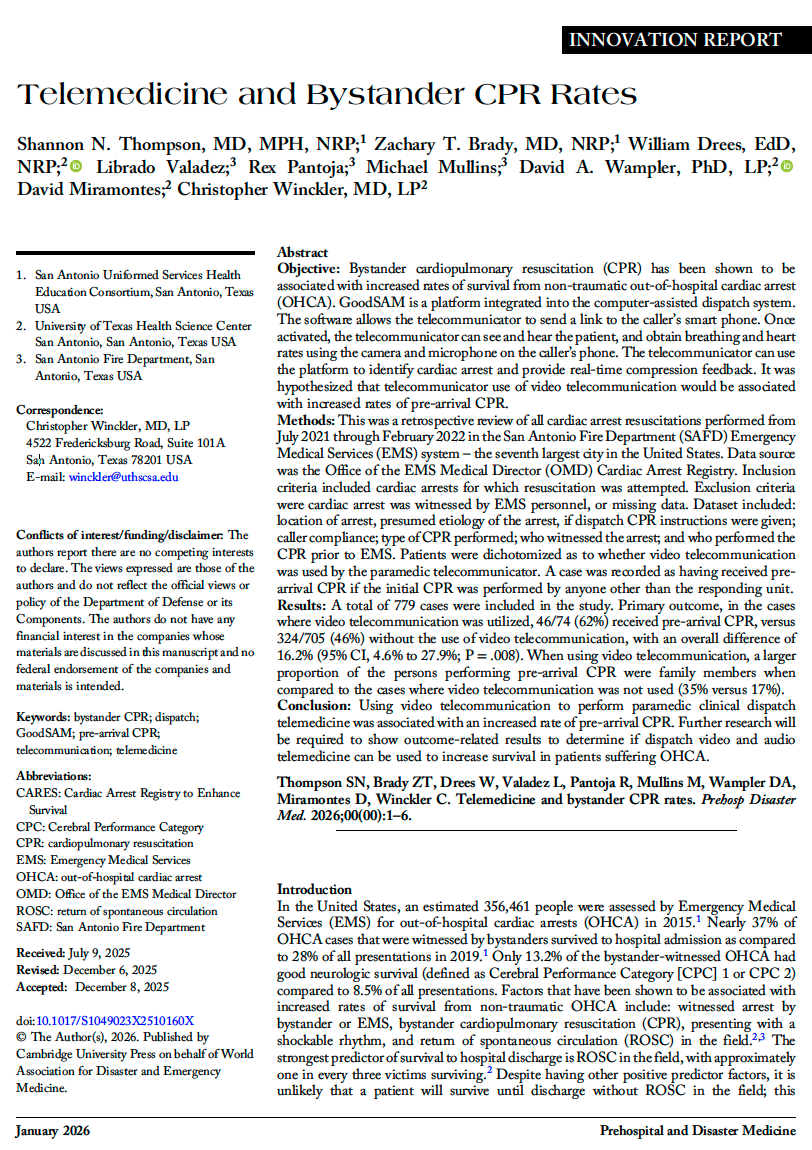
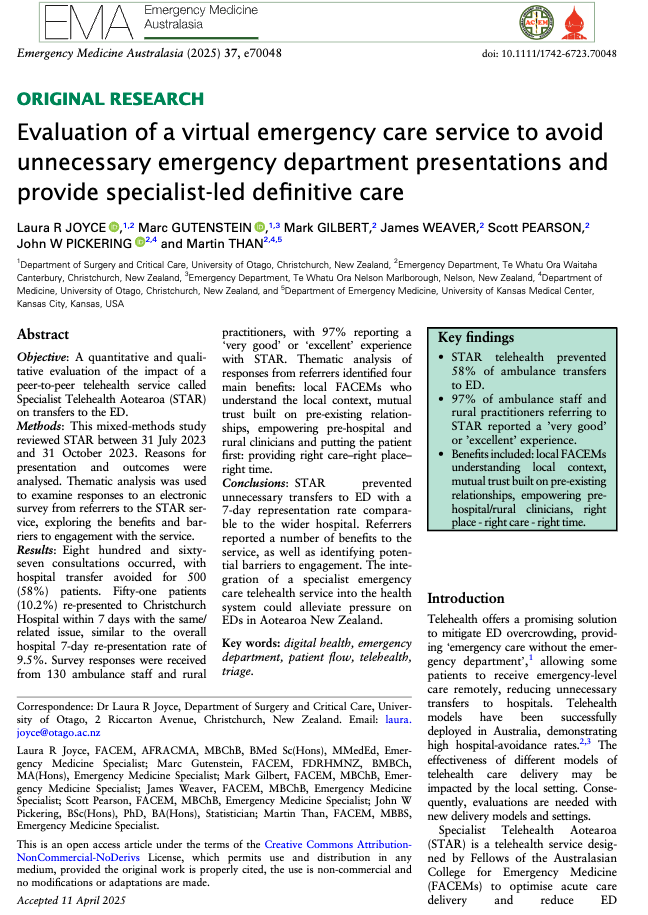
This study used GoodSAM as a virtual ED video tool for 3 months. Across its 867 video consultations:
This study analysed 838 emergency GoodSAM Instant On Scene Videos. Key findings:

CPR was provided with live video in 52 OHCA cases, by 90 bystanders. Video-guided CPR improved CPR quality:

This seminal paper demonstrated the ease of use, reliability, patient flow and governance processes that make GoodSAM Instant On Scene video ideal for HEMS service deployment.
Read the paper
This study by the team at Ambulance Victoria completed 738 video consultations for non-urgent mental health concerns. They demonstrated GoodSAM video resulted in fewer emergency ambulance dispatches compared with voice-only triage with increased referral to alternative/more appropriate services.
Read the paper
This report evaluated GoodSAM video in the North West Ambulance Service 111 Centre.
Key findings:

Key findings:
This study compared video and telephone triage of 617 children with respiratory symptoms. Fewer video-triaged children were assessed at hospital within 8 hours (39% vs 46%, p=0.07), a tendency that was not statistically significant. The technique was highly feasible and acceptable, with no adverse events registered.
Read the paper
This study randomised 1059 calls to virtual or in-person response. There were significant improvements across all measures with GoodSAM Video response:
With no evidence of adverse effects.
Read the paper
This study of 517 domestic abuse cases found that, compared to standard follow up, GoodSAM video resulted in:

Providing evidence of benefit in terms of lives saved requires a comprehensive cardiac registry and ambulance services to follow up survivors. When done, the odds of survival with a GoodSAM response have been found to be about 3 times greater (see below). Ambulance Victoria report 54 survivors from GoodSAM intervention and there are many survivor stories.
This population-based observational cohort study of 9196 out-of-hospital cardiac arrests found that 1158 had a smartphone-activated responder attend (564 before EMS arrival and 594 after). The risk-adjusted odds ratio of patient survival to hospital discharge in those that had a smartphone-activated responder before EMS arrival was 1.37, i.e. 37% higher odds of survival.
Read the paper
Key findings:
* Reported acceptance rates were low (1-5%). However, this is 2016-2018 data, and responder density and acceptance are considerably higher now (over 15%).
Read the paper
Brian Haskins
This web-based survey of 1985 responders found that 38% accepted alerts, 27% arrived on scene and 14% provided patient care. One responder screened positive for probable PTSD, attributing it to events at and outside work, with the smartphone alert also contributing.
Read the paper
This case study by Neil Churchill OBE describes the deployment of GoodSAM in partnership with NHSE and the Royal Voluntary Service during Covid, when 750,000 people came forward as NHS Volunteers. This was the first scaled roll out of micro-volunteering.
Read the paper
This is a comprehensive report of micro-volunteering during the Covid pandemic. It should be noted that GoodSAM was working in partnership with NHSE and RVS, and hence the actual specification and delivery of some aspects were at their direction.
Read the paper
This study of over 9,000 NHS Volunteer Responders, the programme GoodSAM powered during the pandemic, found that active volunteers reported significantly higher life satisfaction, sense of worthwhileness, social connectedness and local belonging, with benefits estimated at least 140 times the programme's costs.
Read the paper